


Welcome to this month’s long-form edition of The Integrity Gap. For new subscribers, the general format is:
What We’re Seeing - 3 trends or emerging risks
Intel - 1 case study
Tools & Resources - 1 practical framework or idea
What’s Next - forward-looking insight
What We’re Seeing
Back to the Future. In the run-up to the 2008 crisis, we saw a bunch of hideous deals rushed through, bulldozing risk and compliance. I’m getting the same vibes in 2026. We know the music will end soon, and there aren’t enough chairs. That will drive risky behaviour as people try to cram as much money into their pockets in anticipation of leaner times.
As the Iran war drives oil, energy, fertiliser, helium (used to cool AI data centres), and therefore much else (food, logistics, travel, medical equipment) through the roof (just wait until harvest), Russia will be the beneficiary. Putin will exact a price for his magnanimous cooperation. This US foreign-policy-by-whim (no obvious plan for resolution) is creating a disastrous and very foreseeable ripple.
The talk of the one-person AI unicorn, unsurprisingly, is BS. The current story about Matthew Gallagher is misleading. Yes, he (and his brother) used fleets of agents (more on that below), but they are shifting someone else’s product, using borderline (ethical/legal) sales tactics and tools, and paying much of their revenue in referral fees. Affiliate marketing, essentially. I’m waiting for the person who creates with AI and retains most of that revenue (Gallagher’s referring ~60%-80% of revenue, as I understand it). Creating using AI (as we discuss below) requires a deep understanding of the ingredients in your offer and how to make that into a meal.
Case Study
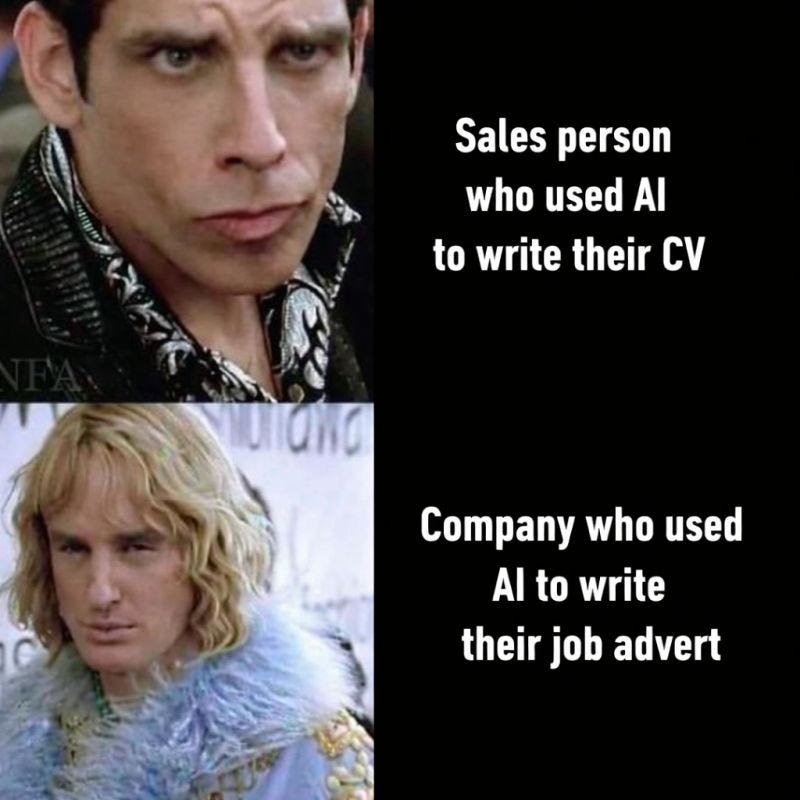
A few weeks back, I wrote the LinkedIn post below that prompted some debate. Where do you sit on the AI-ification of recruitment (both sides of the fence)?
There’s a lot of talk about candidates subjected to AI screening and interviews. I sympathise. That must be utterly soul-crushing (although...have you met an old school HR recruiter...?).
...Joke, sort of.
However, this week, I’ve been on the other side of the AI recruitment equation. I knew AI would be a factor in some applications, but it was overwhelming when 90%+ of the cover letters in the first batch were obviously majority AI-generated.
Awful, long, tedious, samey.
Drowning in e-💩, we adapted and included some trip-wires for AI in the application instructions, and appointed an internal AI agent in a detection (NOT review/decision) capacity.
The AI rather ‘leaned in’ to the role (albeit encouraged with prompting you’d normally reserve for investigations - “maintain a professional scepticism”).
Some of the more savage critiques:
😖 While mercifully short, her answers still carry the distinct scent of an LLM.
😖 His self-taught skill is “AI tools and prompt engineering,” which is ironic given how poorly he utilized AI to write this cover letter.
😖 Question 3: A non-story about a vague marketing task.
😖 This application manages to hit a brand new low, but in a slightly different way...
😖 He used ChatGPT to generate a perfectly sanitized, completely irrelevant cover letter.
The good news is that the candidates who didn’t completely outsource to AI stand out spectacularly. So much so that I already feel bad knowing they can’t all be hired.
The Reality Check
Getting AI right requires doing the boring thing, repeatedly.
How many of us have given a rambling prompt, uploaded a bunch of examples, and prayed?
Many gurus peddle fancy prompt kits. I’ve even seen a whole “risk management platform” built on fancy prompts. Unsurprisingly, the outputs are rubbish.
Why?
For AI to work better, we need to think like we’re preparing a meal:
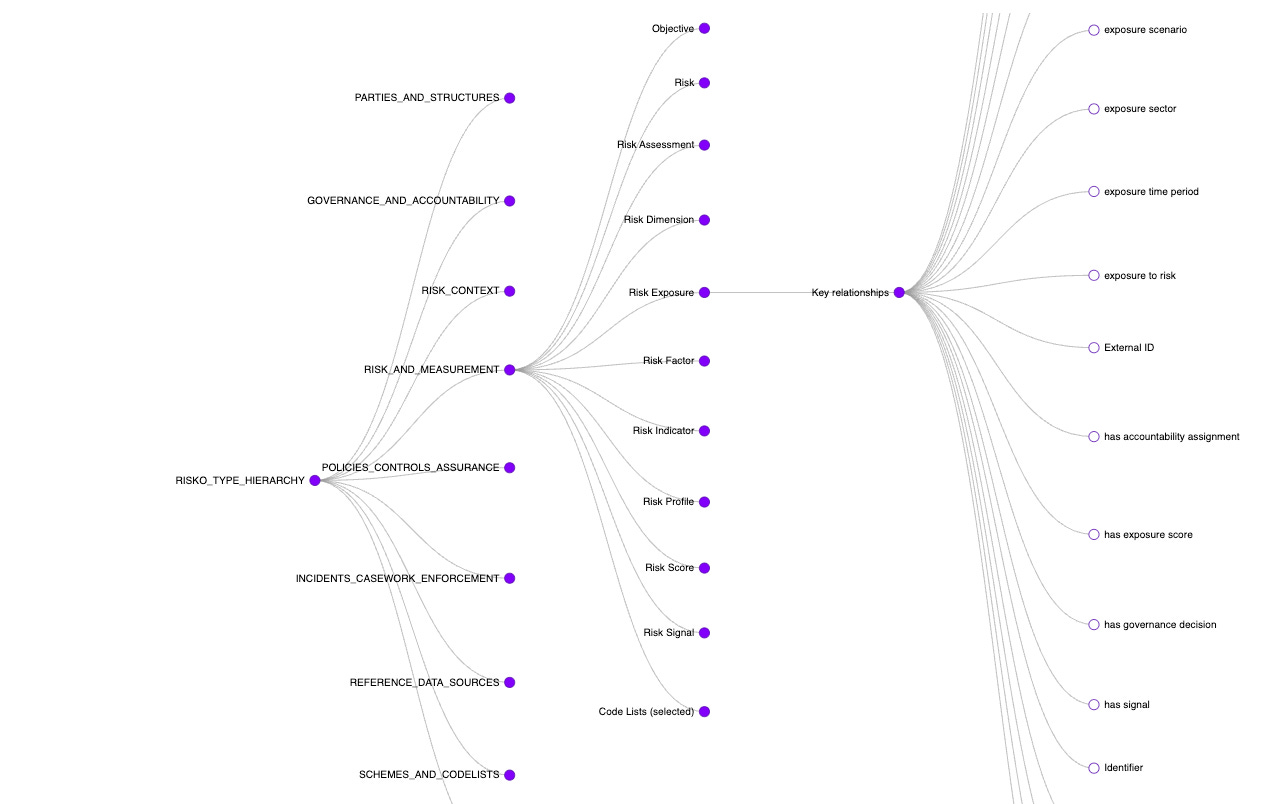
Recipe: I know, basic right. What does a good recipe book have? Normally, a list of core ingredients, cooking methods, and any other foundations. For example, we have a great Sichuan cooking book, which dedicates the first chapter to ingredients (including composites, like sauces) that will be recurrent throughout the recipes. In AI land, this is a schema. We developed Risko™️, which was an exhausting few months of categorising every risk ‘ingredient’ into a mutually exclusive but collectively exhaustive framework (screenshot snippet below).
Ingredients: Most of us don’t chuck in a lump of butter with the wrapper on. Yet we upload docs, images, PPTs, etc. and expect AI to peel off the wrapper, peel, and do the dicing (chunking in AI-glish). When we recently examined (by building some code) how AI analyses documents, it’s haphazard. Sobered, we created scripts for nine agents (yes, nine) to do the peeling, dicing, and slicing. An abridged version: confirm the type of document; convert to PDF; screenshot each PDF page in high resolution; extract the text; extract the graphics and images; anchor the text and graphics/images; combine each document into a markdown file (AI-readable); once completed, combine all documents into one markdown; look for duplicates, contradictions, overlap.
Spacing: Have you ever crammed too many things into a pan or tray and watched what you hoped would sizzle instead broil and steep? Yup, me too. In the AI world, this is “agents,” or the lack thereof. If you hope one AI chat or agent can cook multiple items perfectly when all crammed together, it won’t. We need an MCP. Not Andrew Tate, MCP here stands for Model Context Protocol. This is how AI connects to specified sources. In our case, to get AI to better calibrate inherent risk, we identified 50-100 (depending on sector, model, etc.) sources (from Transparency International to niche publications on money laundering). MCP helps AI call each individual with a fleet of agents using if/then logic. Ask it to screen all 100 sources in one agent, and it’ll hallucinate more than Keith Richards on an ayahuasca retreat.
Temperature: The cooking temperature for ice cream and a cake differs. Same for AI, but it’s called tokens. If you’ve pulled your hair out at a four-page AI response when one line would do, it’s probably because the model hasn’t had token parameters set. The tokens needed to retrieve a ranking on the World Justice Project website are very different from those required to perform fraud pattern analysis on a set of accounts.
Timing: A complex meal is like a play - each character must enter and exit at the right time. AIs have context windows (the amount of chat history they can hold). But, more than that, they need to understand the order of timing - do the potatoes go in before the roast? Specifying order, splitting tasks by agent (to avoid context window crashes), and plating after appropriate resting are vital.
You’ll notice none of the above is especially exciting or revolutionary. But hopefully it makes the point. We can’t chuck all the ingredients into a vat, wrappers on, spin the heat gauge, and come back in two hours and expect a dinner worth eating. Same with AI ‘tools.’ The devil is in the details.
What’s Next?
Spring is a time of renewal and vibrancy. It’s also a pause for reflection. I have likely seen more springs than I will yet see.
A trip to Iceland with the kids, and an Easter weekend with family, provided a necessary jolt and reminder about what matters.
I am no longer as sharp as I once was. Attention to detail, concentration, and the mental juggling that got me here will not keep me here.
So, it’s time for a second spring.
I expect it’ll involve some stepping back from the intricacies of day-to-day delivery, focusing on knowledge transfer, and continuing to explore partnerships (often in unrelated areas - get in touch if you have ideas).
For those of us who have some semblance of personal identity intertwined with our professional selves, recognising that to continue striving only leads to diminishing returns is sobering. But it’s also liberating.
If you’re in that second half (or wondering; most ‘professions’ peak in late-30s and early-40s), this book might help: Finding Meaning in the Second Half of Life: How to Finally, Really Grow Up.

Quote
“For the unlearned, old age is winter; for the learned, it is the season of the harvest.” - Unknown