
Declaring & Diagnosing
Why self-assessments, declarations, and overcomplication can both help, and hurt

Two things usually happen before we invest in, appoint, or engage a third party:
We ask them to make a bunch of declarations.
We assess the risk implications.
On a recent project interviewing impact investors, I found that some preferred self-assessments, letting investees rate their own business integrity risks. Others insisted on in-house diligence, document reviews, staff interviews, the works.
Both approaches have their merits (and their pitfalls).
The Trouble with Self-Assessments
We’ve published several self-assessment tools over the years, on compliance maturity, fraud risk, investment fit, and so on.
The results can be sobering.
One organisation, safeguarding critical national infrastructure, scored 16% for fraud prevention. Those who use our tools usually want the truth, warts and all, so they can act.
But once money is involved, things get murkier.
A few years ago, we assessed a financial institution for an investor. The investor asked the investee to complete a self-assessment before we began.
They scored themselves perfectly.
Think: “poster child for compliance.” DOJ-ready levels of brilliance.
The reality?
It was one of the weakest integrity frameworks I’ve ever seen.
They needed the investment. That conflict skewed everything.
When you ask someone who wants your money whether they manage risk the way you expect, the answer is rarely going to be “no.”
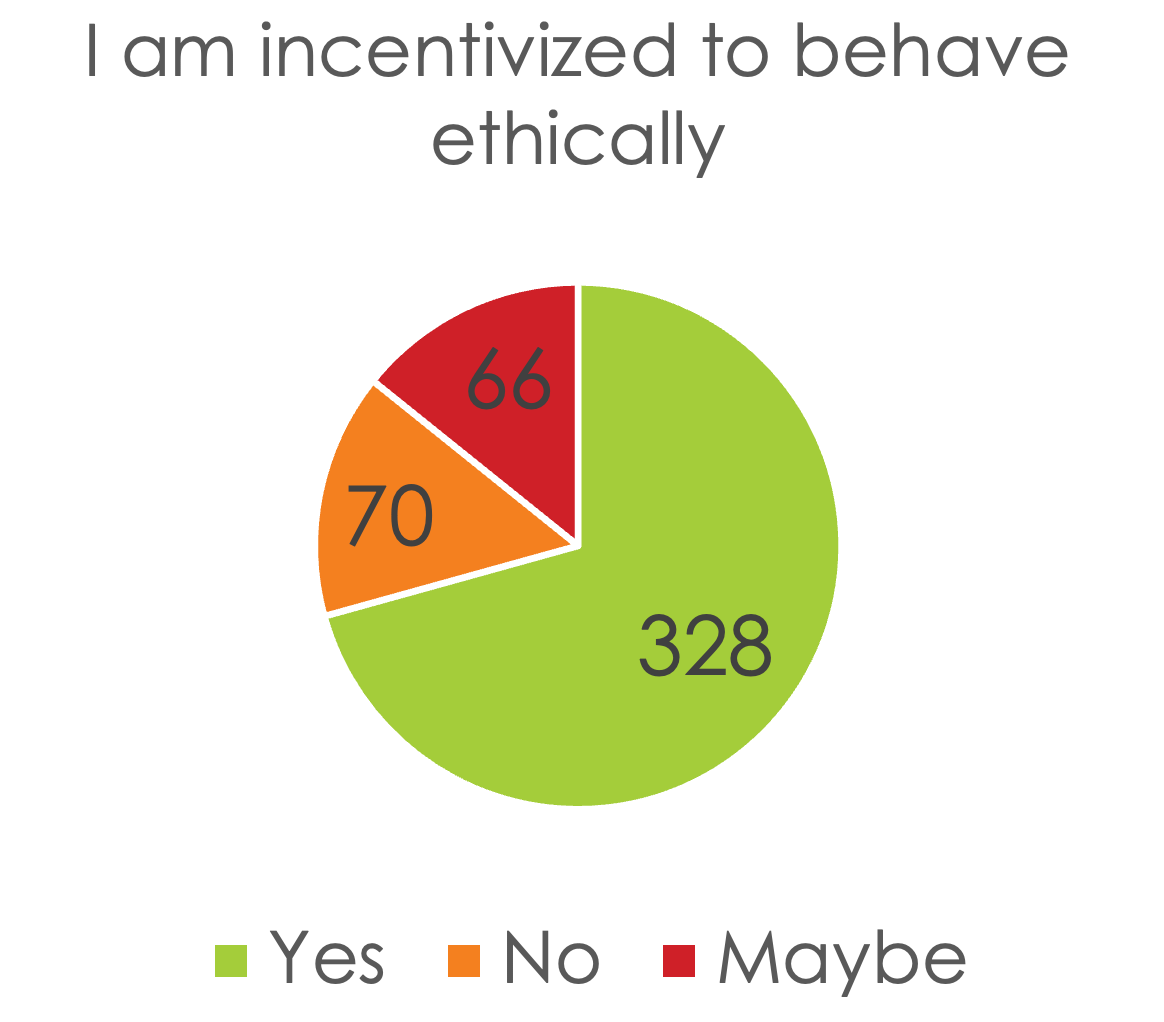
Declaration vs. Diagnosis
So, should we ditch declarations and self-assessments altogether?
Probably not.
They serve a purpose, legal and evidential (“true to the best of my knowledge…”). Positive declarations also give you something to interrogate.
Still, the real learning happens when we go beyond ticking boxes.
Some of the best projects I’ve worked on recently, especially with investors in energy and healthcare, did just that.
They didn’t stop at “diagnosis.” They did something about it.
Example: A healthcare company working with 11 distributors across 14 Asian markets discovered weak bid management controls, issues like conflicts of interest and bribery, in nearly half of them.
Their response?
Run a workshop for all 11 (mandatory for the five with issues), share a cleaned-up SOP, and create an open space for problem-solving.
A few hours of work, massive payoff.
If you don’t have time to provide that level of hands-on support, fair enough, that’s the gap we’re working to fill.
We’re currently consolidating hundreds of resources, guides, templates, and training modules, into a repository designed to help less mature partners close those gaps themselves.
Stay tuned.
Why Use Three Words When Thirty-Three Will Do?
Here’s a classic from Judith Butler’s Further Reflections on the Conversations of Our Time (1997):
“The move from a structuralist account in which capital is understood to structure social relations in relatively homologous ways to a view of hegemony in which power relations are subject to repetition, convergence, and rearticulation brought the question of temporality into the thinking of structure, and marked a shift from a form of Althusserian theory that takes structural totalities as theoretical objects to one in which the insights into the contingent possibility of structure inaugurate a renewed conception of hegemony as bound up with the contingent sites and strategies of the rearticulation of power.”
Still with me?
That, right there, is Dawkins’ Law of the Conservation of Difficulty:
“The easier an academic field is, the more it tries to preserve its difficulty through complex jargon.”
And while I do and don’t agree, we’re all guilty of it sometimes.
Sometimes it’s ego.
Sometimes it’s insecurity.
Sometimes it’s the curse of knowledge, forgetting that what’s obvious to us isn’t obvious to others.
Here’s the opener from a recent anti-bribery policy we reviewed:
“ACME Corp recognises and follows all applicable laws and regulations and respects lawful customs of the regions where we operate and transact. In Country A, under the provisions of Legislation B, acceptance or attempted acceptance of any form of illegal gratification (i.e., anything of value other than a legal entitlement) by a public servant is a punishable offence…”
…and it goes on. For another five paragraphs.
Oof.
AI can’t fix this kind of writing (I tried). Sometimes it’s better to start over entirely.
That said, AI can help with readability scores, and with showing you how complex your content actually is.
Try it:
Run your Code of Conduct, Ethics policy, or Anti-Bribery statement through a readability test.
You might be surprised how high a reading age your documents demand.
Contextual Quote for the Week
“Before I came here I was confused about this subject. Having listened to your lecture I am still confused. But on a higher level.”
— Enrico Fermi
Need More?
Find out why the world’s most ethical investors say I’m “particularly skilled at sensitively engaging with firm leadership on very tricky topics.”
Why SMEs we’ve screened as potential investments thank us for “the deep thoughtful approach.”
And why Transparency International said:
“We wholeheartedly recommend Rupert for his creativity, inventiveness, and professionalism - a definite 10 out of 10,”
after a recent collaboration.
Plus: free assessments, guides on integrity risk and sustainability, two chapters of my book, and how to schedule a no-obligation strategy session.
👉 Get More