
Bribe, Bribe, Bribe, Baby!
What happens when corruption gets a hall pass

So, corruption is cool again.
Not so fast.
Yesterday, an investor asked me what the temporary suspension of the Foreign Corrupt Practices Act (FCPA) enforcement might mean. Their questions were sharp, and revealing:
“How might the halted FCPA enforcement affect U.S. companies operating in high-risk countries?”
“What are the long-term reputational risks for companies that relax their anti-corruption practices?”
“How should firms adapt their governance and compliance strategies during this regulatory limbo?”
“And what does this mean for relationships with foreign partners and due diligence?”
Here’s roughly how I answered.
The Global Police Are on Coffee Break
Bribery is illegal everywhere, but enforcement is weak almost everywhere.
The FCPA made the U.S. Department of Justice the de facto world police on corruption. Enforcement didn’t just target American firms, it hit foreign ones with U.S. ties too (subsidiaries, listings, transactions in dollars, etc.).
Now, with enforcement paused, the effect goes far beyond the U.S.
Predatory officials in some markets may “test” U.S. firms by being more brazen in soliciting bribes.
Corrupt companies anywhere may take this as a green light to play dirty.
And no, this doesn’t actually make U.S. firms more “competitive.” It just drags everyone down.
What Companies Might Do (and Why They Shouldn’t)
I can’t see U.S. companies tearing up their compliance policies and shouting “Have at it!”
More likely, they’ll quietly loosen internal enforcement, fewer audits, fewer investigations, fewer compliance resources.
The real risk? Leaks.
If word gets out that compliance teams are being cut or controls ignored, the reputational fallout could be worse than any DOJ fine.
The smarter approach is to stay steady.
Bribery remains illegal. Always has. Always will.
This isn’t the time to get creative with ethics.
What This Means for the Rest of Us
For most mid-caps, scale-ups, and businesses in emerging markets, the FCPA was never their main concern anyway.
Corruption isn’t an abstract “enforcement risk.”
It’s a bleeding, insidious, parasitic grind on operations.
It strangles supply chains.
It scares off investors.
It costs lives and livelihoods.
So, while Trump’s rollback might send tremors through legal teams at the Fortune 500, for the rest of us it’s business as usual, fighting the same corrosive forces that make growth harder and risk management essential.
The FCPA may be paused, but the cost of corruption never is.
The Less-Awful-Than-Expected Book
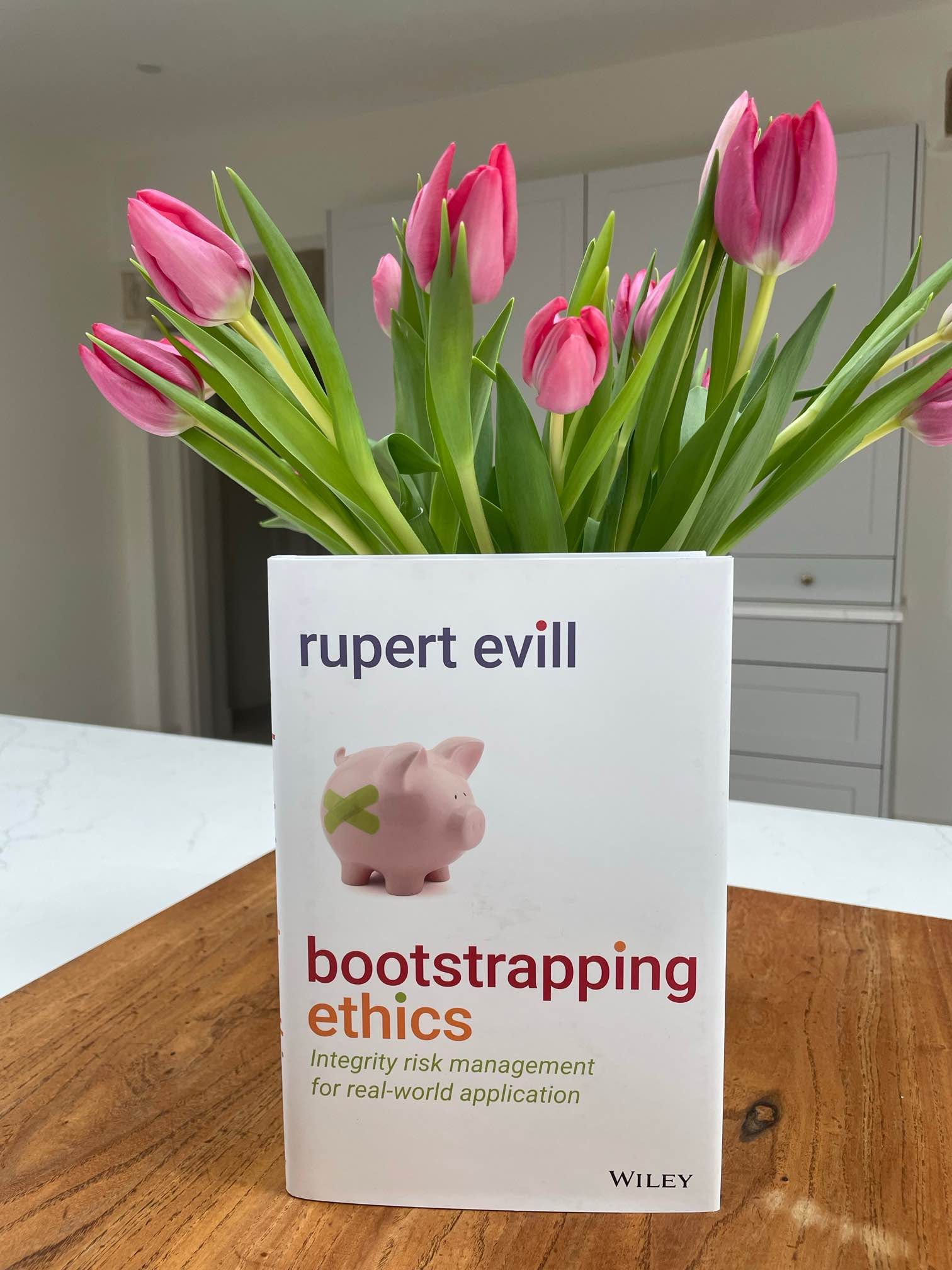
This week, Ethics Insight joined a business accelerator. One of the early exercises was to revisit our brand positioning, including my book, Bootstrapping Ethics.
I’ll admit, rereading it was... humbling.
Some parts made me cringe (not teenage poetry-level cringe, but close). My thinking on values and culture has evolved, and I’d update that chapter today. But the rest? It holds up surprisingly well.
At its core, the book is about controlling what you can, especially when everything else feels uncertain.
The publication process was rough, and I never really marketed it properly. The accelerator team called that out, bluntly, but rightly.
So, I’m taking their advice: less British modesty, more visibility.
If you’d like a free electronic copy, just hit reply.
(If you subscribed using a personal email, please let me know who’s behind the request.)
Contextual Quote for the Week
“You have power over your mind - not outside events. Realise this, and you will find strength.”
— Marcus Aurelius
Need More?
Find out why the world’s most ethical investors say I’m “particularly skilled at sensitively engaging with firm leadership on very tricky topics.”
Why SMEs we’ve screened as potential investments thank us for “the deep thoughtful approach.”
And why Transparency International said:
“We wholeheartedly recommend Rupert for his creativity, inventiveness, and professionalism - a definite 10 out of 10,”
after a recent collaboration.
Plus: free assessments, guides on integrity risk and sustainability, two chapters of my book, and how to schedule a no-obligation strategy session.
👉 Get More